For many women in nineteenth century America, marriage shaped nearly every part of adult life. It influenced where a woman lived, how she spent her time, what work she performed, and how much control she had over her own future.
Those expectations are central to Julie Dorsey’s The Peacemaker’s Wife.
Polly Justice enters marriage believing she has chosen a man who will provide stability and allow her to pursue her interest in healing. She soon discovers that marriage can look very different once the vows are spoken.
Her husband, John, expects obedience and domestic devotion. Polly, however, has ambitions of her own. She wants to deliver babies, treat the sick, study medicine, and become useful to the wider community.
That tension becomes one of the novel’s strongest conflicts.
Polly does not reject marriage itself. She wants love, family, and companionship. What she resists is the idea that becoming a wife should erase the rest of who she is.
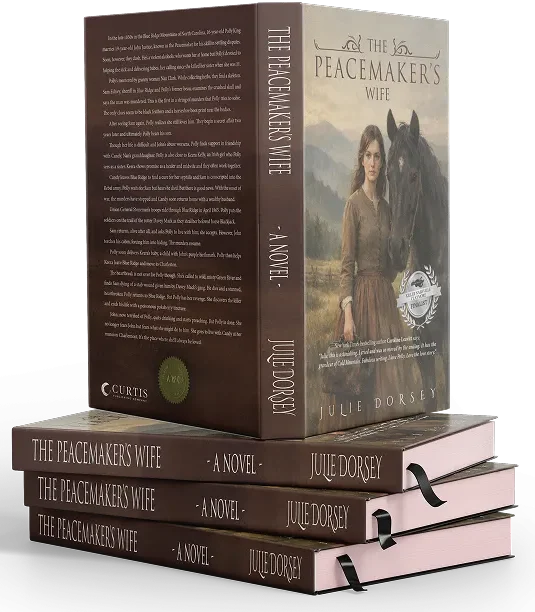
Her choices are also complicated by love. Before marrying John, Polly has strong feelings for Sam Edney. She chooses John because she believes he offers a steadier future. Later, she is forced to confront the difference between the man she thought she married and the man he becomes.
For women like Polly, leaving a troubled marriage is not a simple decision. Home, children, reputation, money, faith, and family expectations all carry weight.
That makes every choice more difficult.
Polly must decide how much she will endure, what kind of life she wants for her children, and whether duty should require the surrender of her own safety and calling.
As her medical knowledge grows, so does her confidence. The more people depend on her judgment, the harder it becomes for her to accept that someone else should control her simply because she is his wife.
In The Peacemaker’s Wife, Julie Dorsey uses Polly’s marriage to explore a larger question faced by many women of the period: how much of themselves could they keep after becoming wives and mothers?
Polly’s answer develops slowly, through love, disappointment, fear, work, motherhood, and loss.
Her story makes The Peacemaker’s Wife more than a historical novel about marriage. It is a story about a woman deciding that devotion to others does not require giving up her own voice.