Long before women were widely admitted to medical schools or recognised as professional physicians, they carried essential knowledge from one generation to the next. Mothers taught daughters how to care for the sick, grandmothers shared remedies gathered through decades of experience, and older healers trained younger women to assist with childbirth, injuries, fever, and disease.
In rural communities, this knowledge was not simply tradition. It was a means of survival.
Women learned which plants could ease pain, reduce swelling, calm a cough, or help a wound heal. They knew how to prepare teas, salves, poultices, and tinctures using ingredients found in forests, gardens, and kitchens. They also understood that healing required more than a collection of remedies. A skilled healer needed patience, judgement, courage, and the ability to recognise when a patient’s condition was becoming dangerous.
Much of this education took place through observation. A younger woman might accompany an experienced healer on visits, gather herbs under her direction, prepare treatments, and watch how she examined patients. Over time, she would be trusted with greater responsibility. Every birth, illness, and injury became part of her training.
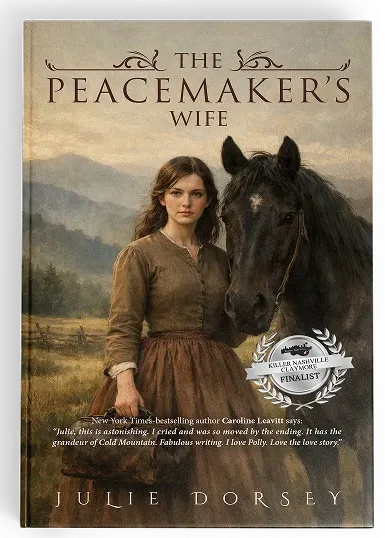
Julie Dorsey’s The Peacemaker’s Wife explores the importance of this female inheritance through the relationship between Polly Justice and Nan Clark.
Nan is an experienced granny woman whose medical knowledge has been shaped by years of caring for families in the Blue Ridge Mountains. She understands the healing properties of local plants, the risks surrounding childbirth, and the difficult choices that must sometimes be made when no physician or hospital is available.
When Nan recognises Polly’s determination to become a healer, she does more than teach her a list of remedies. She invites Polly into a world of responsibility. Polly learns to gather the correct plants, prepare medicines carefully, assist women in labour, and remain steady when fear threatens to take control.
For Polly, these lessons become part of a much larger journey. Her desire to practise medicine grows from the loss of her baby sister, a tragedy that leaves her determined to prevent similar suffering. Nan’s guidance gives her the practical skills to turn grief into purpose.
Their relationship also reflects the quiet strength of women who preserved knowledge in societies that rarely valued their intelligence. Because formal education was often unavailable to them, women created their own systems of teaching. They learned through trust, repetition, memory, and shared experience.
This knowledge was powerful because it belonged to the community. It was carried into cabins, sickrooms, childbirth chambers, and isolated farms. It reached people who might otherwise have received no care at all.
The Peacemaker’s Wife honours the women who kept that knowledge alive. Through Polly and Nan, Julie Dorsey shows that healing traditions were not accidental or simple. They were built through generations of observation, sacrifice, and service.
The novel reminds readers that when women teach one another, they pass down more than skills. They pass down confidence, independence, compassion, and the belief that another woman’s life can become larger than the world expects.
Step into the shadows of Blue Ridge and uncover the truth today. https://www.amazon.com/dp/B0GHKW5LCV/