When people think of the Civil War, they often picture soldiers, battlefields, generals, and military campaigns.
But women were carrying another part of the war at home.
In communities like the Blue Ridge Mountains, women kept households functioning while men left to fight. They raised children, prepared food, cared for livestock, tended gardens, preserved supplies, helped neighbors, and looked after the sick and injured.
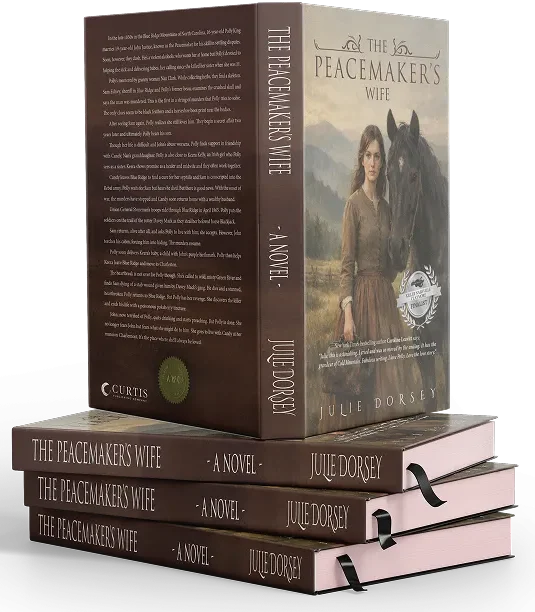
Julie Dorsey brings that side of the war into The Peacemaker’s Wife.
Polly Justice does not experience the conflict from a battlefield. She experiences it through absence, fear, grief, shortages, and the growing danger inside her own community.
As men leave, women are forced to take on more responsibility. Daily work does not stop because there is a war. Children still need feeding. Animals still need tending. Crops still need attention. Illness still comes. Babies are still born.
For Polly, that also means continuing her work as a healer.
Her medical knowledge becomes even more important during a period when communities are strained and formal help is difficult to reach. She must care for others while also managing her own family and the uncertainty created by the war.
Women also face the consequences of lawlessness.
In the novel, members of the Home Guard take food and supplies from local families. What they steal is not excess. It is what households need to survive. For women trying to keep children fed, every sack of food, every chicken, and every piece of meat matters.
The emotional cost is just as severe.
Women wait for news of husbands, brothers, sons, and sweethearts. Letters may take time to arrive. Rumors travel quickly. Sometimes the only news that comes is bad news.
Polly learns how war can reach into a home without a single battle taking place nearby.
That is one of the strongest elements of The Peacemaker’s Wife. The novel shows that women were not simply waiting on the sidelines.
They were working, grieving, protecting, healing, enduring, and making decisions that held families together.
Julie Dorsey gives readers a view of the Civil War that is often overlooked.
Through Polly Justice, The Peacemaker’s Wife shows what war looked like to the women who stayed behind and still had to keep life going.